
Some years ago I had the opportunity to travel to India as part of NGO FietGratia stuff. We conducted a medical campaign in the region of Maharastra. I’m not a doctor but an IT guy, so my role in the team was to assist to the doctors and serve as translator (obviously in English, not Hindi…). While we were traveling around the region I learned a lot of things, to many to tell in this article, but I would like to share with you two of them:
1. It is amazing what a group of motivated and full of hope volunteers can get to do, especially when they have the knowledge, skills and experience required. The medical team treated more than 500 people, most of them children, in just a few days.
2. Doctors, surgeons, nutritionists, civil engineers, etc. are very useful in under development countries, but there is a little that an IT guy could do there… (or at least it seemed to me at this time).
 I have to admit that since I met the work of PMI International Development CoP (ID CoP) my opinion has been radically changing about how my knowledge, skills and experience could contribute to an NGO, whether in a medical campaign, development project or day-by-day work.
Through webinars, articles and documents shared by ID CoP during this time I could know better the Third Sector and the challenges and problems it faces today.
Maybe we are in a time in history where people have greater social awareness and feel more committed at the time to get involved and help others. A good example could be Spain, where in 2013 and in the middle of the economic crisis many NGOs have survived thanks to the private donations from individual donors, while the public donations were reduced drastically. In the same way, more and more people are working as volunteers, with about dedication, in all kinds of NGOs or Foundations.
We could find the same trend in the private sector. Today, every company worth its salt has its area of Social Responsibility. These companies may be able to deliver a number of funds that organizations could not have obtained from any other source, even from governments. It might seem that Third Sector has everything it needs: money, human capital and many projects to implement. But reality is quite different, many of the development projects that are carried out are not completed within the schedule, or exceed a lot the estimated budget. Not forgetting that some projects fails and never become implemented.
 Three years ago, a group of volunteers joined an initiative from ID CoP named “Supporting PMI Chapters in International Development”. The target of this initiative is to support local NGOs through PMI volunteers.
At the beginning, we thought that we would work only with small and medium organizations, because we thought that large NGOs and Foundations have implemented solid project management processes that enable them to carry out their work efficiently. But the truth is we were totally wrong.
The Third Sector has, in general, a little knowledge on project management; most technical and project leads have a great expertise in the area in which they work, but that knowledge often collides with the fact that they don’t know how to properly manage a budget, the human resources assigned to their team or the risks that at the time to implement a project could lead to ruin all the work.
To say that development projects fail because project managers do not know much about project management would trivialize a too complex problem to discuss in this article. Obviously funds and volunteering remain key to carry out these projects, but without a proper management of these resources, illusion, passion and effort of these volunteers just hitting reality.
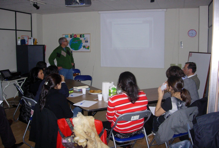 From “Supporting PMI Chapters in International Development” we work sharing knowledge in project management with NGOs, offering specialized training and mentoring consulting, as well as generating a useful knowledge base in the project management that these organizations could use. We work with them to develop knowledge and improve skills, and help them to strengthen the organizational maturity, the effectiveness and efficiency in project management, the promotion of best practices and incrementing their prestige with their donors and partners.
For you who are reading this article, words such as budget, human resources, risks, opportunities, scope, quality… are words that are part of your day-to-day vocabulary. Now, ¿do you understand your potential? ¿do you understand the way how you can help to NGOs and their beneficiaries?
Collaborating with International Development CoP you can do much; you can help those who more help.
¿What are you waiting for start working?
Contact with ID CoP
 |
 |
 |
 |
 Angel Perez Palacios