
I have started to learn about OpenStack so I will publish some post during the next weeks talking about the different components we can find in the Cloud solution provided by Red Hat. This first post is just a high level overview about the OpenStack platform and services that we could find, in the next one we will have the opportunity to view some of these services in depth.
OpenStack is running over AWS so it provides similar features, like a modular infrastructure, designed to easily scale out and it is based on a set of services (that are growing).
OpenStack needs to access x86 hardware resources, an operating environment, hypervisor, services, etc. and leverages existing code linux libraries for functionality. OpenStack is dependent on the underlying Linux, you need to run it over a Linux OS. Red Hat as community member has contributed to the Community OpenStack platform, but additionally Red Hat has created an OpenStack version optimized for and integrated with Red Hat Enterprise Linux:
Red Hat Enterprise Linux OpenStack Platform 4.0
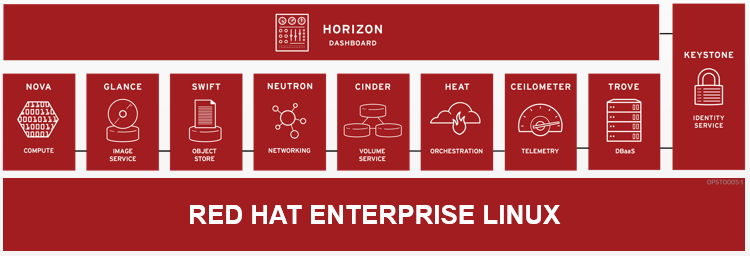
*This means that we can find Community OpenStack (running on Linux) and Red Hat OpenStack (running on Red Hat Enterprise)
OpenStack can run in any hypervisor but this not means that it could have some limitations when work with some of them. For example, OpenStack can run with VMWare vSphere, but WMWare report some limitations that you have to take into account:
-
Support is explicitly not offered for the deprecated “direct-to-ESX” OpenStack Compute driver.
-
OpenStack Networking (Neutron) support is provided only for the VMware NSX networking plug-in only (previously Nicira NVP).
-
Support is explicitly not offered for using nova-network to provide networking functionality to the vCenter deployment in production environments.
-
OpenStack Block Storage (Cinder) support is provided only for the VMware VMDK block storage backend.
-
Images uploaded to the OpenStack Image Service for use with the vCenter driver must be in VMDK format.
You can find more information about the integration with VMWare in this link and about the certified hypervisor platforms in this other link.
Regarding to the guest supported, you can run these OS versions:

OpenStack had a new release each 6 months, each new version includes new compoments and each one has an original name. Current version is Juno and the next one will be deployed on April 2015 with the name of Kilo.
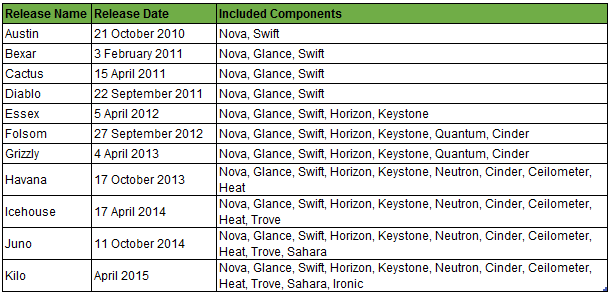
We could define OpenStack like a cloud operating system that controls large pools of compute, storage, and networking resources throughout a datacenter, all managed through a dashboard that gives administrators control while empowering their users to provision resources through a web interface. We could use it to integrate both our private and our public Clouds using Red Hat solution:
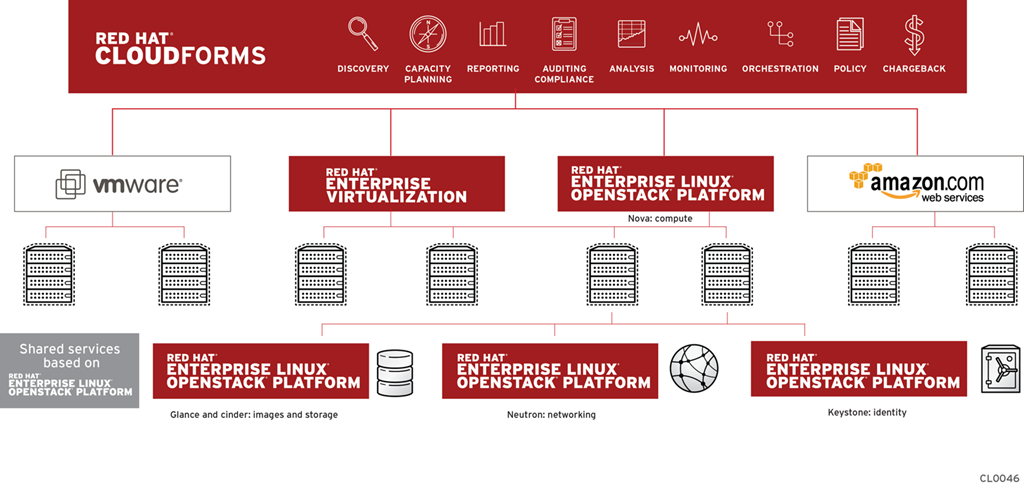
We will review OpenStack architecture in the next posts as well as all the services we can find in the platform right now.
Can not you wait to start to play with the platform? You can get a 90-day evaluation on this link.
Enjoy it!!
 Angel Perez Palacios